
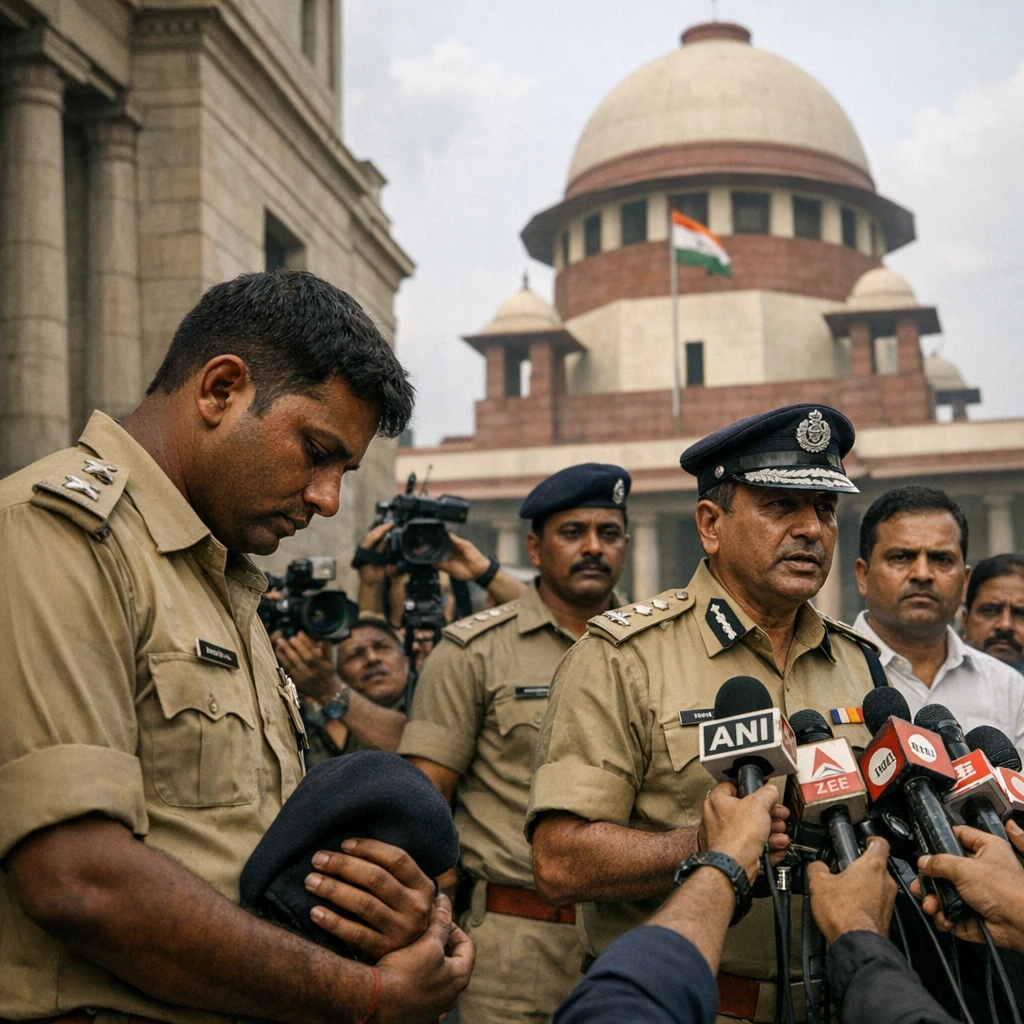
Bihar Cop Suspended for Harassment Amid Investigation, Sparks Outcry Over Police Misconduct
Introduction
In a startling incident that underscores serious issues of misconduct within the Indian police force, a police sub-inspector from Muzaffarpur, Bihar, has been suspended following allegations of making obscene calls and sending inappropriate messages to a woman whose case he was investigating. This case, which has garnered attention due to its implications for police accountability and public trust, is a stark reminder of the challenges faced by women in seeking justice.
Incident Overview
The officer in question, Lalan Kumar, was assigned to investigate a case filed by a woman at the Ahiyapur police station, linked to case number 1416/26. However, rather than upholding his duty to protect and serve, Kumar allegedly exploited his position to harass the very individual he was supposed to assist. Following the woman's complaint about his inappropriate behavior, a formal inquiry was initiated by the Senior Superintendent of Police (SSP), Kantesh Kumar Mishra.
Investigation and Findings
The inquiry, conducted under the supervision of the Town Sub-Divisional Police Officer (SDPO-2), revealed substantial evidence against Kumar. This included call details and audio recordings that corroborated the woman's allegations of harassment. The SSP’s office confirmed that the investigation found clear instances of "indiscipline and dereliction of duty," which not only damaged the reputation of the police department but also highlighted the systemic issues within the law enforcement framework.
Official Statements
In a statement regarding the inquiry's findings, the SSP noted, "The evidence points to a serious misuse of position that cannot be overlooked. Such behavior is detrimental to the image of the police and undermines public trust in law enforcement." This declaration reflects a growing recognition within the police hierarchy of the need for accountability and reform.
Consequences for Lalan Kumar
As a result of the inquiry, Lalan Kumar was suspended from duty. During his suspension, he will receive a subsistence allowance, which is standard practice in such cases. However, the police department is also pursuing departmental proceedings against him, indicating that this matter will not simply end with suspension but may lead to further disciplinary action.
Broader Implications
This incident raises significant questions about the culture within police departments in India, particularly regarding the treatment of women who seek help from law enforcement. The fact that a police officer would allegedly engage in such behavior while investigating a case is alarming and reflects a broader pattern of gender-based misconduct within the police force.
- Gender-Based Violence: Women often face additional challenges when reporting crimes, including the risk of harassment from those in positions of authority.
- Accountability in Law Enforcement: This case highlights the necessity for robust mechanisms to hold police officers accountable for their actions.
- Public Trust: Incidents like this erode public trust in the police, making it more difficult for victims to come forward.
Historical Context
The issues surrounding police misconduct, particularly regarding gender-based harassment, are not new in India. Numerous cases have emerged over the years where police officers have been accused of exploiting their power. For instance, the 2012 Delhi gang rape case brought national and international attention to the treatment of women in India, prompting widespread calls for reform within the police and legal systems.
Despite these calls, many women continue to face barriers when seeking justice, often encountering indifference or hostility from law enforcement officials. This incident in Muzaffarpur is a reminder that while some progress has been made, significant work remains to ensure the safety and dignity of women within the justice system.
Conclusion
The suspension of Lalan Kumar is a critical step towards addressing misconduct within the police force, but it is merely the beginning of a much-needed reform process. As the police department moves forward with departmental proceedings against him, there is hope that this case will serve as a catalyst for change, prompting a reevaluation of how police conduct is monitored and how victims are treated.
For the broader community, especially women in Bihar and across India, this incident serves as a stark reminder of the challenges they face in seeking justice and the urgent need for systemic change within law enforcement. The focus must now shift towards ensuring that those who are sworn to protect the public are held to the highest standards of conduct, fostering an environment where victims can safely report crimes without fear of further victimization.