
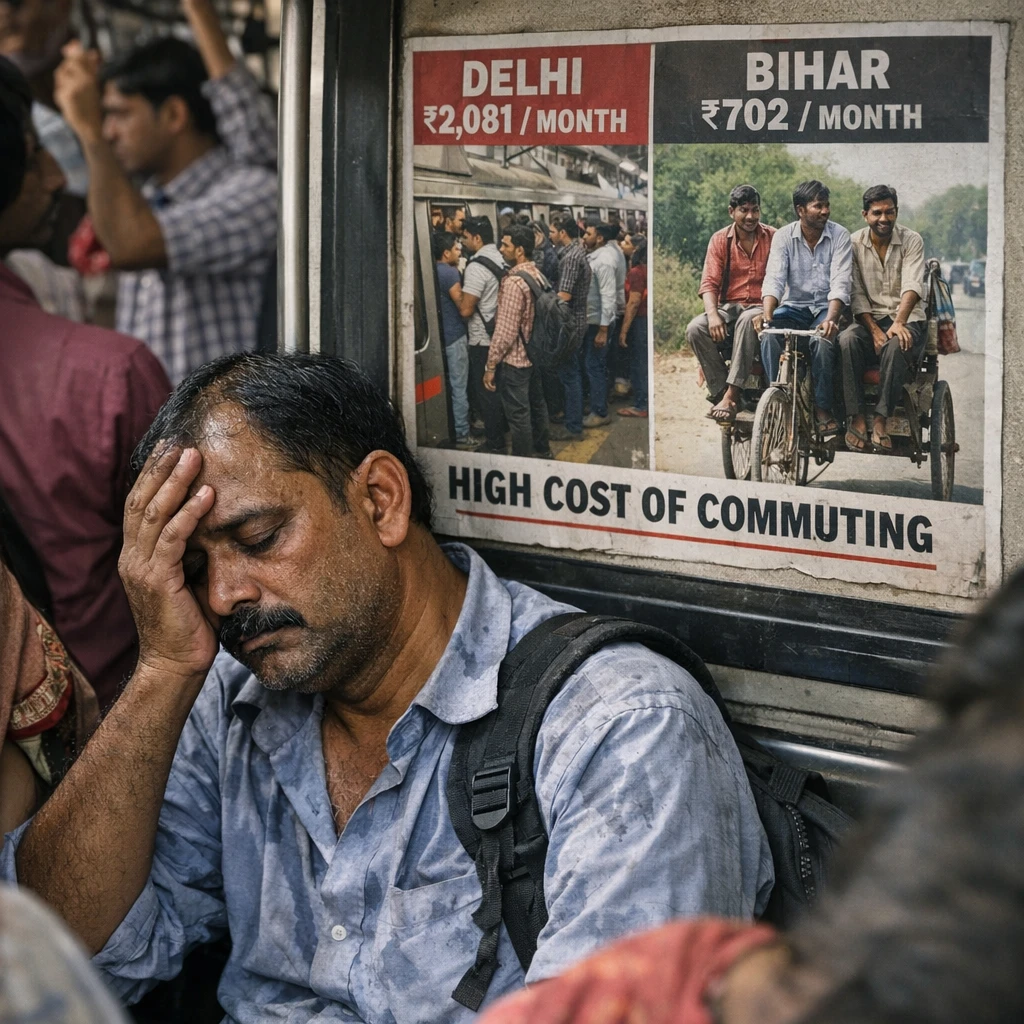
Delhi Workers Pay Nearly Three Times More for Commuting Than Bihar Counterparts, Survey Reveals
Delhi Workers Spend Nearly Three Times More on Commuting than Bihar Workers: A Survey Analysis
A recent survey conducted by the National Household Travel Survey (NHTS) has unveiled striking disparities in commuting costs between workers in India's capital, Delhi, and those in the economically less developed state of Bihar. The findings indicate that average monthly commuting expenses for workers in Delhi stand at ₹2,081, while their counterparts in Bihar spend only ₹702. This substantial difference of ₹1,379 not only underscores the economic divide between regions but also raises important questions about the implications for workers' household budgets and overall quality of life.
Survey Overview
The NHTS, which collected data from July 2025 to June 2026, aimed to assess commuting patterns and costs across various states in India. The survey's comprehensive approach included a wide range of transportation modes and distances traveled, providing a detailed snapshot of how commuting expenses can vary significantly based on geographic and economic factors.
Key Findings
- Average Monthly Commuting Costs: Delhi workers - ₹2,081; Bihar workers - ₹702.
- National Average: The average monthly commuting expenditure across India is ₹1,044.
- Annual Difference: The annual difference in commuting costs between the two regions amounts to ₹16,548.
- Urban Travel Patterns: 64.1% of urban workers travel more than 1 km for work.
- Common Modes of Transport: Two-wheelers (52.3%), buses (9.2%), autos (8.6%), cars (5.7%), and rail-based transport (5.3%).
Economic Disparities
The survey highlights widespread economic disparities across Indian states, with Delhi exhibiting the highest commuting costs. These costs can significantly impact household budgets, particularly when combined with other essential expenses such as housing and food. The reliance on private vehicles, especially two-wheelers, is notable, accounting for over half of urban work trips. This reliance can lead to varying financial implications based on fluctuating fuel prices and maintenance costs.
Additionally, the distances workers must travel can strain their finances and time, reducing the hours available for family and personal responsibilities. As commuting becomes an increasingly significant portion of a worker's expenses, it raises concerns about the overall economic well-being of families, especially in urban settings where living costs are already high.
Implications for Workers
The findings of this survey bring to light several critical implications for workers in urban India:
- Household Budget Strain: With commuting costs consuming a significant portion of monthly income, workers may find it challenging to meet other financial obligations.
- Time Constraints: Longer commuting times can lead to reduced leisure and family time, impacting overall quality of life.
- Health and Wellbeing: Increased commuting stress can affect mental and physical health, leading to a decrease in productivity.
Transportation Infrastructure and Policy Implications
The survey's findings also underscore the need for improved transportation infrastructure and policies that address the disparities in commuting costs. In Delhi, where commuting expenses are significantly higher, there is an urgent need for:
- Investment in Public Transport: Enhancing the public transportation system could alleviate some of the financial burdens on workers.
- Subsidies for Low-Income Workers: Implementing subsidies or financial assistance programs could help low-income workers manage their commuting expenses.
- Urban Planning Initiatives: Developing residential areas closer to workplaces may reduce commuting distances and associated costs.
Conclusion
The stark contrast in commuting costs between Delhi and Bihar, as revealed by the NHTS survey, is a microcosm of the broader economic disparities that exist within India. As urbanization continues to rise, addressing the challenges posed by commuting expenses will be crucial for ensuring equitable economic growth and improving the quality of life for urban workers. Policymakers must consider these findings to create sustainable solutions that alleviate the financial burden on workers while fostering a more efficient and accessible transportation network.
"The survey highlights the wide differences in commuting costs across Indian states, indicating that commuting can significantly impact household budgets, especially when combined with other expenses such as housing and food."
As India moves forward, understanding and addressing these disparities will be essential for building a more inclusive and economically balanced society.